
Bhishma Pitamah – Story, Vows & Life Lessons from Mahabharata
Discover Bhishma Pitamah’s story, his vow, role in the Mahabharata war, and timeless life lessons on dharma, leadership, and sacrifice. Slug: bhishma-pitamah-mahabharata-story-life-lessons
BLOG WRITING
Who Was Bhishma Pitamah in the Mahabharata?
In the vast epic of the Mahabharata, few names command as much reverence as Bhishma Pitamah — the invincible guardian of Hastinapur and the ultimate symbol of dharma and sacrifice.
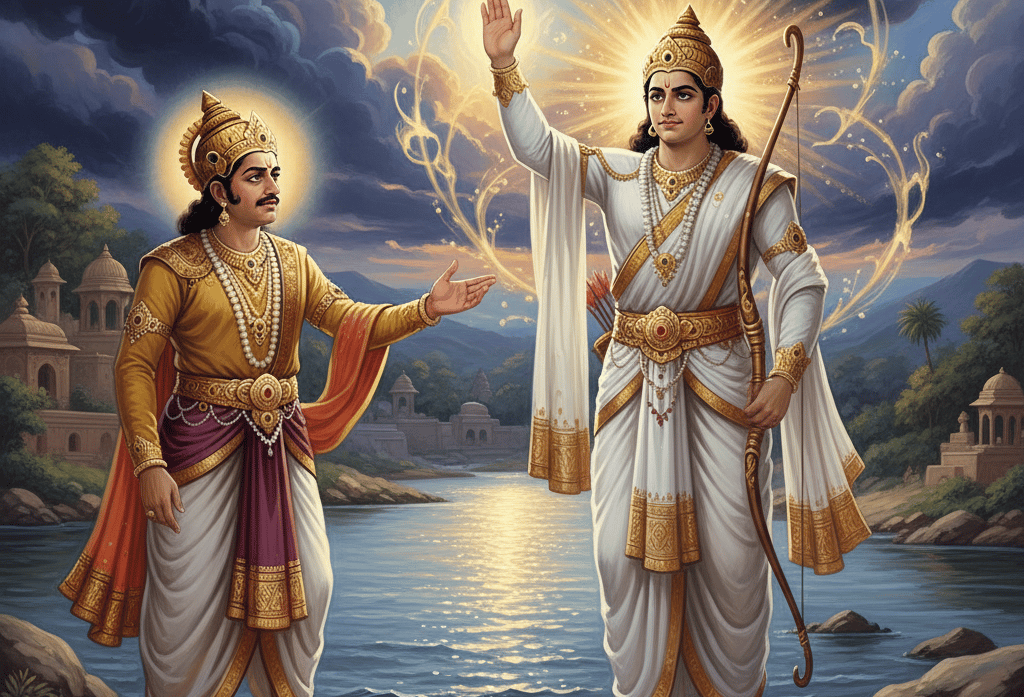
Born as Devavrata, the Gangaputra (son of the river goddess Ganga), Bhishma’s story is one of devotion, discipline, and duty. Known for his unmatched wisdom and valor, Bhishma’s journey from prince to celibate warrior defines what it means to live with purpose — even amid moral chaos.
1. Dharma vs. Adharma — The Eternal Crossroad
Bhishma’s loyalty to Hastinapur bound him to defend the Kauravas, even when he knew dharma lay with the Pandavas. His conflict between duty and righteousness remains one of the most defining moments of the Mahabharata.
Lesson: True dharma lies in discernment. Blind allegiance, even to duty, can become adharma. Bhishma teaches that courage is not in obedience, but in standing for justice — even when it’s uncomfortable.
2. Bhishma Pratigya — The Terrible Vow that Defined His Life
The defining moment of his life was the Bhishma Pratigya, or Bhishma’s terrible vow. To fulfill his father’s happiness, Devavrata renounced the throne and took a vow of lifelong celibacy. His sacrifice was so great that the gods themselves named him Bhishma, meaning “the one who took a terrible vow.”
Lesson: Integrity is the foundation of greatness. Bhishma’s vow of celibacy and his devotion to his father highlight the power of sacrifice and selflessness — values that transcend time.
3. Mastery of the Self — The True Mark of Leadership
Beyond his martial skill, Bhishma’s greatest conquest was over himself. His ability to control emotion and desire made him the ideal leader — calm, rational, and rooted in dharma.
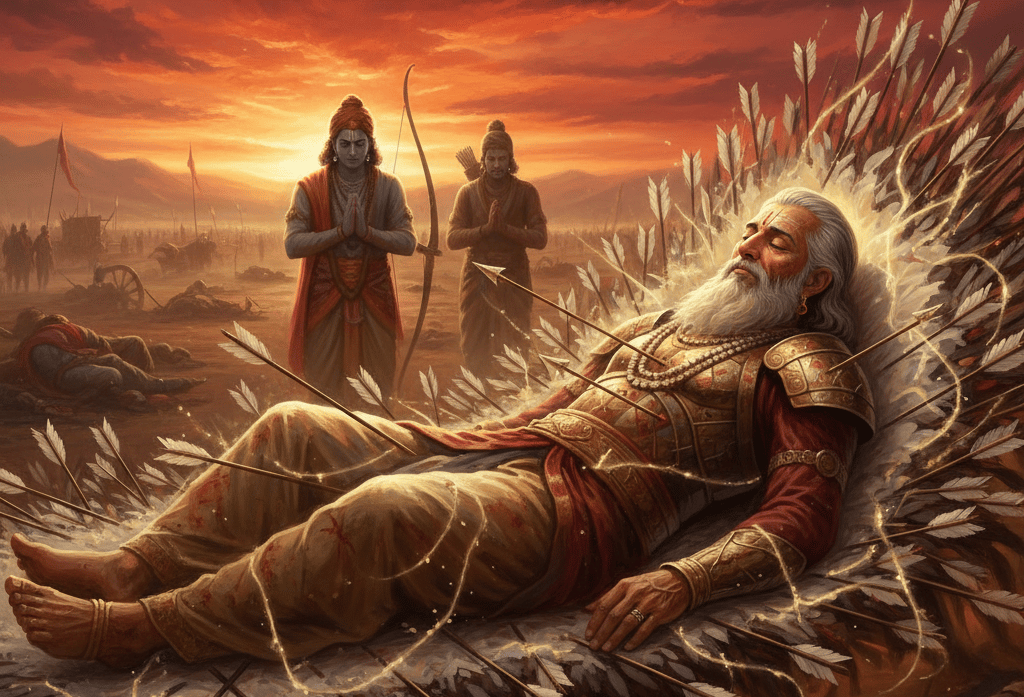
Even in his final moments, lying on a bed of arrows, Bhishma chose serenity and awaited the sacred moment of Uttarayana for his death — a decision granted by his wish-long life boon (Ichha Mrityu).
Lesson: Leadership begins with self-mastery. Bhishma teaches us that controlling one’s mind is the highest form of strength.
4. Free Will vs. Destiny — The Boon of Ichha Mrityu
Blessed with Ichha Mrityu, Bhishma could choose the time of his death — symbolizing perfect harmony between free will and destiny. Despite knowing fate’s inevitability, he continued to act righteously and with awareness.
Lesson: Life is a balance between acceptance and action. Bhishma’s story reminds us that destiny doesn’t define us — our choices within destiny do.
5. The Legacy of Wisdom — Bhishma’s Teachings to Yudhishthira
Even in death, Bhishma became a teacher. His guidance to Yudhishthira on leadership, dharma, and governance — captured in the Shanti Parva and Anushasana Parva — forms one of the most philosophical sections of the Mahabharata.
Lesson: True immortality lies in wisdom. Bhishma’s legacy wasn’t just his heroism in battle, but the moral and ethical knowledge he passed on to future generations.
6. Bhishma the Warrior — Valor and Invincibility
Bhishma was unmatched on the battlefield. His legendary battle with Parshurama and his unbroken dominance in the Kurukshetra war made him one of the most feared warriors of his time. Only through Shikhandi’s intervention could he be defeated.
Lesson: Strength without ego is true power. Bhishma’s humility despite being an invincible warrior showcases leadership rooted in restraint, not aggression.
Modern Relevance — Bhishma’s Lessons for Today’s World
Bhishma Pitamah’s life may belong to an ancient epic, but his lessons are more relevant than ever.
In business: His leadership qualities teach us the importance of integrity over profit.
In personal life: His discipline inspires us to make choices guided by values, not convenience.
In society: His silence during Draupadi’s humiliation warns of the dangers of inaction in the face of injustice.
Lesson: The story of Bhishma isn’t just mythology — it’s a mirror reflecting the choices we make every day between comfort and conscience.
How Did Bhishma Die? The Final Act of Dharma
After being fatally wounded by Arjuna under Krishna’s guidance, Bhishma lay upon a bed of arrows — a symbol of his endurance and detachment. He chose to leave his body during Uttarayana, aligning his death with divine timing. His passing marked not an end, but the transcendence of a soul who had mastered both life and dharma.
Final Reflection: The Eternal Flame of Dharma
Bhishma Pitamah remains one of the most complex, revered, and human figures in the Mahabharata. His life illustrates that dharma is not always simple, and that wisdom often comes through struggle.
In every era, when humanity faces moral confusion, Bhishma’s story whispers a timeless truth — that real strength lies not in force, but in clarity, compassion, and conscience.
AUTHOR EMPOWERMENT
Join a vibrant community of storytellers today.
Connect
Explore
+91 7980205375
© 2025. All rights reserved.